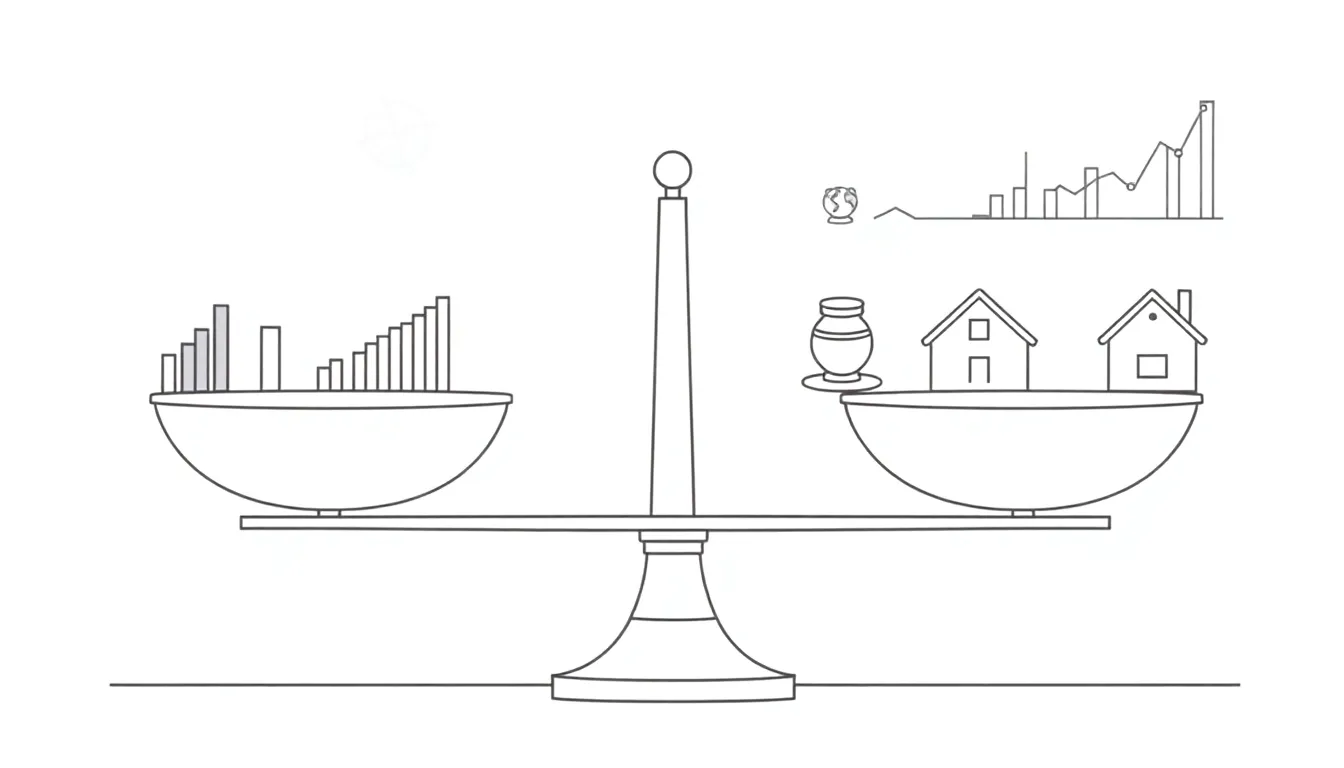
Building wealth in the stock market isn't about finding the next big winner or timing the perfect entry point. It's about spreading your risk intelligently so that no single downturn can wipe out your progress. A diversified stock portfolio acts as your financial safety net, balancing growth potential with protection against market volatility. Whether you're just starting out or refining an existing strategy, understanding how to diversify effectively can make the difference between riding out market storms and watching your savings evaporate. Let's break down exactly how to build a portfolio that works for you, not against you.
Understanding What Diversification Actually Means
Diversification means spreading your investments across different asset types, industries, sectors, and geographic regions to reduce the impact of any single investment's poor performance. Think of it as the investment equivalent of not putting all your eggs in one basket. When one part of your portfolio stumbles, others can remain stable or even grow, cushioning the overall blow.
The primary goal here isn't to maximize returns at all costs. It's to manage risk and reduce portfolio volatility. You're trading the possibility of massive gains from betting everything on one stock for the steadier, more reliable path of balanced growth. A tech stock might soar 200% one year, but if that sector crashes the next, your entire nest egg goes down with it. Diversification smooths out those wild swings.

Most well-constructed portfolios include a mix of stocks, bonds, and sometimes alternative investments like real estate or commodities. The classic example is the 60/40 portfolio, which allocates roughly 60% to stocks for growth and 40% to fixed income securities like bonds for stability. This ratio has served generations of investors as a foundation, though your personal split might vary based on age, risk tolerance, and financial goals.
💡 Pro Tip: Before you start buying individual stocks, determine your target asset allocation percentage first. Write it down. Many investors skip this step and end up with a haphazard collection that's either too aggressive or too conservative for your actual needs. Having that target number makes every future decision clearer.
Choosing the Right Mix of Stocks
Within your stock allocation, you need variety across multiple dimensions. Start with sector diversification. The stock market divides into sectors like technology, healthcare, consumer goods, energy, financials, and utilities. Each responds differently to economic conditions. When interest rates rise, financial stocks might benefit while tech stocks struggle. During a recession, consumer staples like food and household products tend to hold steady while luxury goods tank.
Aim to spread your holdings across at least six to eight different sectors. You don't need equal weight in each, but you want enough representation that a sector-specific crisis doesn't devastate your portfolio. If you're heavily concentrated in energy stocks and oil prices collapse, you'll feel that pain acutely.
Geographic diversification matters too. US stocks might dominate your thinking, but international markets offer growth opportunities and additional protection. Emerging markets in Asia, Latin America, and Africa can provide higher growth potential, while developed markets in Europe and Japan add stability. A global portfolio helps you participate in worldwide economic expansion rather than betting solely on one country's success.
Company size creates another layer of diversification. Large-cap stocks (major corporations with market values over $10 billion) offer stability and dividend income. Mid-cap companies provide a balance of growth and stability. Small-cap stocks bring higher growth potential but also greater volatility. Including all three categories helps balance your risk-reward profile across different market conditions.
💡 Pro Tip: Check your portfolio every quarter to see if one sector has grown to represent more than 25% of your holdings. When winners keep winning, they can accidentally dominate your portfolio, recreating the concentration risk you were trying to avoid. Rebalancing keeps your diversification intact.
Using Funds to Build Diversification Efficiently
Buying individual stocks in dozens of companies requires significant capital and constant monitoring. For most investors, mutual funds and exchange-traded funds offer a more practical path to broad diversification. These investment vehicles pool money from many investors to buy hundreds or even thousands of securities, giving you instant exposure to entire markets or sectors.
ETFs trade on exchanges like stocks, offering flexibility and typically lower expense ratios than mutual funds. A single S&P 500 ETF gives you ownership in 500 major US companies for the price of one share, usually under $500. Total market index ETFs go even broader, covering thousands of stocks across all market caps. International ETFs let you add global exposure without researching foreign companies individually.
Mutual funds work similarly but trade only once daily after markets close, and often have higher minimum investments. Some actively managed mutual funds employ professional managers who try to beat market returns through strategic stock picking, though they charge higher fees for this service. Index mutual funds passively track market benchmarks at lower costs, making them popular for long-term diversification strategies.
You can build a fully diversified portfolio with as few as three to five funds. A US total stock market fund, an international stock fund, and a bond fund cover the essential bases. Add a real estate investment trust (REIT) fund and perhaps a small-cap or emerging market fund, and you've created a robust, globally diversified portfolio without needing to pick individual stocks. The key is choosing funds with low expense ratios (under 0.20% is ideal for index funds) so fees don't erode your returns over time.
Balancing Risk Through Asset Allocation
Your stock-to-bond ratio fundamentally determines your portfolio's risk level. Stocks offer higher long-term returns but experience sharper short-term drops. Bonds provide stability and income but grow more slowly. Finding the right balance depends on your timeline, goals, and ability to stomach volatility.
A common rule of thumb suggests subtracting your age from 110 to determine your stock allocation percentage. At 30, you'd hold 80% stocks and 20% bonds. At 60, you'd shift to 50% stocks and 50% bonds. This gradual shift protects you as you near retirement and have less time to recover from market crashes. However, this formula isn't gospel. If you're aggressive and have decades until retirement, you might maintain a higher stock allocation. Conservative investors might prefer more bonds regardless of age.
Alternative investments can add another dimension beyond traditional stocks and bonds. Real estate through REITs provides income and inflation protection. Commodities like gold sometimes move independently of stocks and bonds, offering additional diversification. Some portfolios include a small allocation (5-10%) to alternatives, though they're not essential for basic diversification.
The critical point is maintaining your chosen allocation through regular rebalancing. When stocks surge, they'll grow to represent more of your portfolio than intended, increasing your risk exposure. Selling some of those gains to buy more bonds or underperforming sectors brings you back to your target allocation. Rebalancing once or twice yearly keeps your portfolio aligned with your risk tolerance and prevents drift toward unintended concentrations.
Conclusion
Creating a diversified portfolio isn't complicated, but it does require intention. You're building a structure that can weather different economic seasons without forcing you to perfectly predict which sectors or regions will outperform next year. The 60/40 framework gives you a starting point, but your personal allocation should reflect your specific situation and how much volatility you can handle without panicking. Remember that diversification doesn't guarantee profits or prevent losses, but it does reduce the likelihood that a single bad decision or market event destroys your financial future. Start with broad, low-cost index funds if you're new to investing. As you gain experience and capital, you can add more nuanced positions. The portfolio you build today should let you sleep soundly tonight, knowing you're not overexposed to any single risk that could upend your plans.
FAQs
How many stocks do I need to be properly diversified?
Research suggests that holding 20 to 30 individual stocks across different sectors and geographies captures most diversification benefits. Beyond that, additional stocks provide diminishing marginal protection against volatility. However, using broad index funds or ETFs achieves better diversification with far fewer purchases, since a single fund can hold hundreds or thousands of positions automatically.
Should I diversify within my 401(k) differently than my taxable brokerage account?
Yes, consider your accounts together as one unified portfolio. Tax-advantaged accounts like 401(k)s work well for bonds and actively managed funds that generate taxable events, while taxable accounts favor tax-efficient index funds and stocks you plan to hold long-term for capital gains treatment. This tax-location strategy improves after-tax returns without changing your overall diversification.
Can I be too diversified?
Absolutely. Owning too many overlapping funds or hundreds of individual stocks creates "diworsification," where you dilute potential returns without meaningfully reducing risk. You also make portfolio management unnecessarily complex. Stick to enough holdings that no single position represents more than 5% of your portfolio, but not so many that you can't reasonably monitor what you own or understand why you own it.
How often should I rebalance my diversified portfolio?
Most financial advisors recommend rebalancing annually or semi-annually, or whenever an asset class drifts more than 5% from your target allocation. Rebalancing too frequently triggers unnecessary transaction costs and taxes. Rebalancing too rarely lets your risk exposure drift significantly from your intended strategy. Setting calendar reminders for twice-yearly portfolio reviews strikes a practical balance for most investors.
Do dividend stocks count as diversification from growth stocks?
They provide some diversification of return sources, since dividend payers often come from mature, stable sectors like utilities and consumer staples, while growth stocks concentrate in technology and healthcare. However, they're all still stocks and will correlate during broad market selloffs. True diversification requires adding different asset classes like bonds or real estate, not just different types of equities.