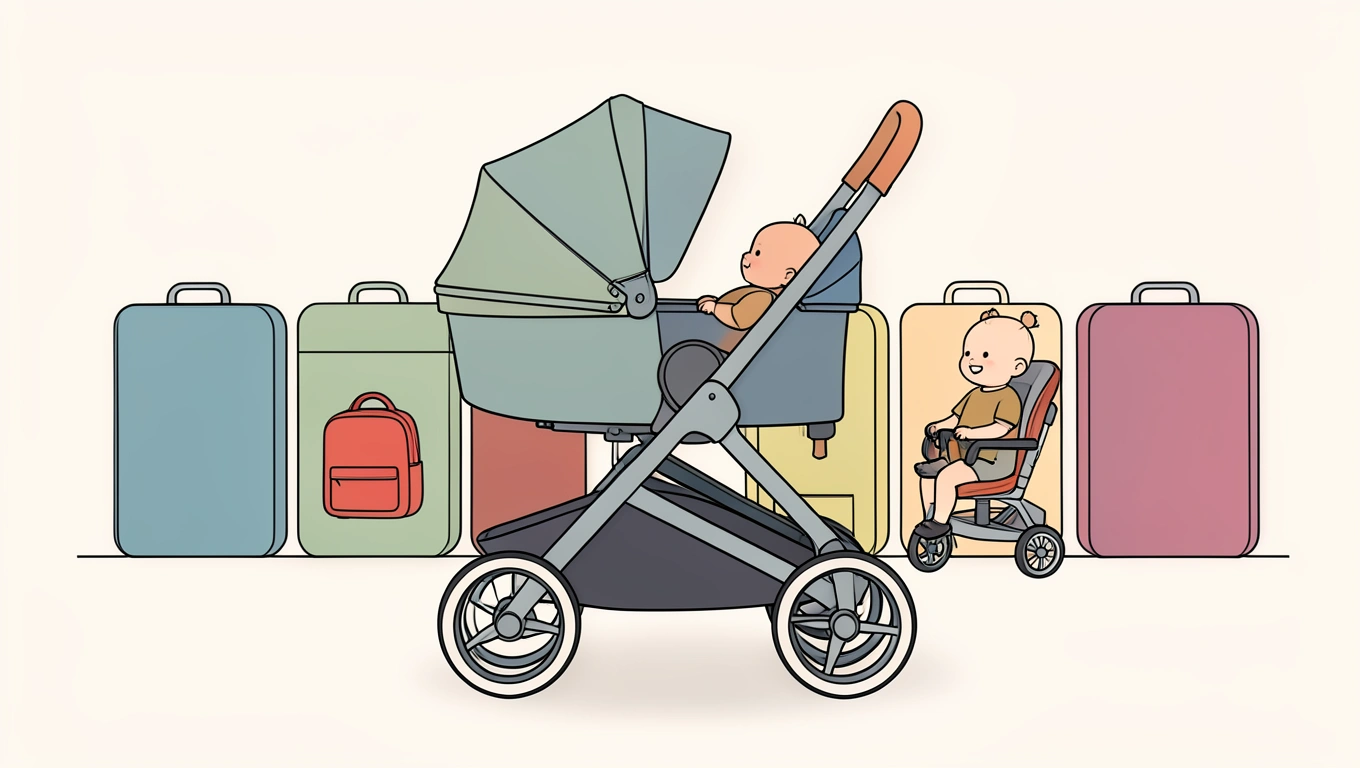
Finding the right stroller can feel overwhelming when you're expecting your first child, but choosing one designed to adapt as your family grows is one of the smartest investments you can make. Instead of buying a new stroller every time your needs change - whether that means adding a second child, transitioning from infant to toddler, or accommodating different outings - a convertible stroller handles it all. These versatile designs save money, reduce waste, and give you peace of mind knowing you won't need to research strollers again in two years. The key is understanding which features actually matter for long-term use and which are just marketing noise.
Understanding Convertible and Modular Stroller Systems
Convertible strollers differ from traditional models in their ability to transform. The best ones start as a single-seat configuration but can expand to accommodate a second or even third child through additional seats, car seat adapters, or ride-on boards. This flexibility means you're not locked into one setup forever.
The core advantage lies in the modular design. Many systems allow you to attach a bassinet for newborns who need to lie completely flat, then swap it out for an upright seat as your baby grows into a curious toddler who wants to see the world. Some models even let you face the seat forward or backward, giving you control over whether your child faces you or looks ahead.

When evaluating options, pay attention to how the conversion process actually works. Some strollers require you to buy expensive add-on components that can cost hundreds of dollars. Others include most configurations in the base price. Consumer Reports tests modular strollers to help parents understand which systems offer genuine value versus those that nickel-and-dime you for every accessory.
Think about your family plans realistically. If you know you want two children close in age, a double-conversion stroller makes sense from day one. If you're uncertain, starting with a high-quality single that can add a second seat later gives you flexibility without committing to a bulkier frame before you need it.
💡 Pro Tip: Before buying any add-on components, check if your stroller brand offers bundle deals or starter packs. Many manufacturers sell packages that include the second seat, adapters, and bassinet for 20-30% less than buying each piece separately - but they don't always advertise these bundles prominently on product pages.
Weight and Height Limits Matter More Than Age
Most parents assume their child will age out of the stroller at a predictable milestone, but the reality is more nuanced. A child's use of a stroller is more reliably guided by fitting within the manufacturer's weight and height limits rather than a specific age. Many standard strollers accommodate children up to 48 to 75 pounds, which can mean anywhere from age three to well past five depending on your child's growth pattern.
This matters when choosing a grow-with-you model because you want headroom in those limits. A stroller rated for only 40 pounds might work fine for a petite three-year-old but become useless before your child is truly ready to walk long distances independently. Look for models with higher weight capacities, especially if your family tends toward taller builds.
The height limit is equally important but often overlooked. Even if your child hasn't hit the weight maximum, if their head extends above the seatback or their legs dangle uncomfortably, the stroller stops being practical. Check the seat depth and height specifications, not just the overall frame measurements.
When you're adding a second child to the equation, remember that both seats need adequate capacity. Some convertible strollers rate the rear seat for a higher weight than the front, or vice versa. You'll need to think about who sits where as your kids grow, and whether you'll need to switch positions as they get bigger.
💡 Pro Tip: If your toddler is already at the 60th percentile or higher for height, add 10-15 pounds to the minimum weight capacity you think you need. Growth spurts happen fast, and you don't want to replace a stroller six months earlier than expected just because you cut it too close on the specifications.
Build Quality Determines True Longevity
A well-crafted, high-quality stroller can withstand the test of time and the rigors of active, growing children, often lasting 3 to 5 years or longer through multiple children with proper care. But not all strollers marketed as "durable" actually deliver on that promise.
The frame material matters significantly. Aluminum frames offer a good balance of strength and light weight, while steel frames are heavier but nearly indestructible. Plastic connectors and joints are common weak points - they crack under stress or repeated folding cycles. Expert testing of stroller durability consistently shows that metal-to-metal connections outlast plastic components by years.
Wheel quality is another make-or-break factor. Foam-filled or air-filled tires handle rough terrain better and maintain their shape longer than hard plastic wheels. Check whether replacement wheels are available from the manufacturer - if the wheels wear out and can't be replaced, your entire stroller becomes useless even if the frame is still perfect.
Fabric durability deserves attention too. You'll be cleaning these seats constantly. Machine-washable fabrics that resist staining save enormous hassle. Some premium models use water-resistant or treated materials that wipe clean easily. If the fabric fades, rips, or holds odors after a year of use, you'll resent that stroller no matter how clever its conversion features are.
Don't overlook the fold mechanism. A stroller you use daily needs to fold and unfold smoothly hundreds of times without jamming or requiring excessive force. Test this in the store repeatedly - if it feels stiff or awkward when new, it will only get worse with wear.
Cost Efficiency and the True Price of Flexibility
Choosing a convertible stroller can offer long-term value and cost efficiency by eliminating the need to buy multiple strollers as your family grows. But the upfront investment is real, and you need to calculate whether the math actually works in your favor.
A basic single stroller might cost $150 to $300, while a quality convertible system can run $500 to $1,200 or more. If you end up having two children and would otherwise buy a single for the first child, then a double stroller for both, you're looking at roughly $450 to $800 total for separate units. A convertible that starts as a single and expands to a double could save you money if it falls in the lower price range, but premium models might cost the same or more than buying two separate strollers.
The real savings come when you factor in the infant car seat compatibility, bassinet options, and toddler seat configurations that you'd otherwise purchase separately or need different strollers to accommodate. Many grow-with-me systems let you use the same frame from birth through preschool without buying a separate travel system, infant carrier frame, or jogging stroller.
Consider resale value too. Parents often recoup 40-60% of their investment selling gently used premium strollers, especially sought-after convertible models. If you take care of your stroller and keep all the adapters and accessories, you can sell it for a decent return once your kids have outgrown it.
There's also the hidden cost of storage and hassle. Owning multiple strollers means dedicating garage or closet space to equipment you're not using at the moment. A single convertible system that adapts to your current need keeps things simpler and frees up space for other gear.
Practical Features That Actually Support Growing Families
Beyond the conversion capabilities, certain features make daily life with a grow-with-you stroller significantly easier. Storage capacity tops the list - when you're out with multiple kids, you need space for diaper bags, snacks, jackets, and shopping bags. Look for a generous under-seat basket that remains accessible even when the stroller is in double configuration. Some convertible strollers lose most of their storage space once you add the second seat, which defeats the purpose.
Adjustable handlebars matter more than you'd think, especially if you and your partner have a significant height difference or if grandparents will be pushing the stroller regularly. A handlebar that accommodates users from 5'2" to 6'4" prevents back strain and makes the stroller comfortable for everyone.
One-handed fold mechanisms become essential when you're juggling a baby, a toddler, and a parking lot. Practice the fold in the store to make sure you can actually do it with one hand while holding a child or groceries. Some "one-handed" folds still require you to kick a lever with your foot while pulling with your hand, which isn't truly manageable when your hands are full.
Recline options should accommodate genuine napping, not just a slight tilt. Strollers designed to grow with a family often feature multiple configurations such as a fully flat recline or bassinet option for newborns and adjustable upright seats for toddlers. Make sure the recline mechanism is easy to operate and doesn't require you to wake a sleeping baby to adjust it.
Sun coverage deserves careful evaluation. Extendable canopies that provide UPF 50+ protection keep kids comfortable in varying weather and lighting conditions. Some convertible strollers offer individual canopies for each seat, while others have a single shared canopy that may not adequately shade both children.
Conclusion
Choosing a stroller that truly grows with your family requires looking beyond marketing claims to evaluate real-world durability, capacity limits, and how the conversion process actually functions in daily use. The best investment is one that matches your specific family plans and lifestyle rather than simply being the most expensive or feature-laden option available.
Take the time to test fold mechanisms, push the stroller over different surfaces, and honestly assess whether you'll use all those modular configurations or just stick with one setup. The right stroller should make your life easier for years, not sit in your garage with unused attachments still in their boxes. When you find that balance of quality, flexibility, and practical features, you'll have a piece of equipment that earns its place in your family for the long haul - and maybe even gets passed down to the next generation or resold to help another family just starting their parenting journey.
FAQs
Can I use a convertible stroller from day one with a newborn?
Yes, but you'll typically need a bassinet attachment or car seat adapter designed for newborns since most stroller seats don't recline fully flat enough for a baby under three months. Many convertible systems include these accessories or allow you to purchase them separately. Check that any car seat adapter is compatible with your specific infant car seat brand and model before buying.
How much heavier is a convertible stroller compared to a standard single?
Convertible strollers typically weigh 25 to 35 pounds in single configuration - about 5 to 10 pounds heavier than a basic single stroller. Once you add the second seat and accessories, total weight can reach 40 to 50 pounds. This extra weight affects how easily you can lift the stroller into a car trunk or carry it up stairs, so test the actual weight before buying if you regularly face these situations.
What's the best configuration for two kids of different ages?
Most parents find that putting the older toddler in the top or front seat and the younger baby in the lower or rear position works best. The toddler can see out better and feels more independent, while the infant stays more protected. Some systems also offer a standing platform or bench seat for the older child, which works well if your toddler doesn't need to sit for the entire outing.
Do convertible strollers fit through standard doorways?
In single configuration, yes - most convertible strollers measure 22 to 24 inches wide. In double configuration, tandem strollers (front-to-back seating) maintain that width and fit through standard 32-inch doors, while side-by-side doubles often measure 29 to 31 inches and can be tight in some doorways, narrow store aisles, and public restroom entrances. Measure the spaces you frequent most before deciding on a configuration style.
Should I buy a convertible stroller if I'm only planning one child?
Probably not unless you specifically value the infant-to-toddler conversion features like the bassinet option and extended weight capacity. A high-quality single stroller will serve you just as well and cost significantly less. Save the convertible investment for situations where you know or strongly suspect you'll have multiple children, or where the ability to attach different seating configurations matters for your specific childcare needs.