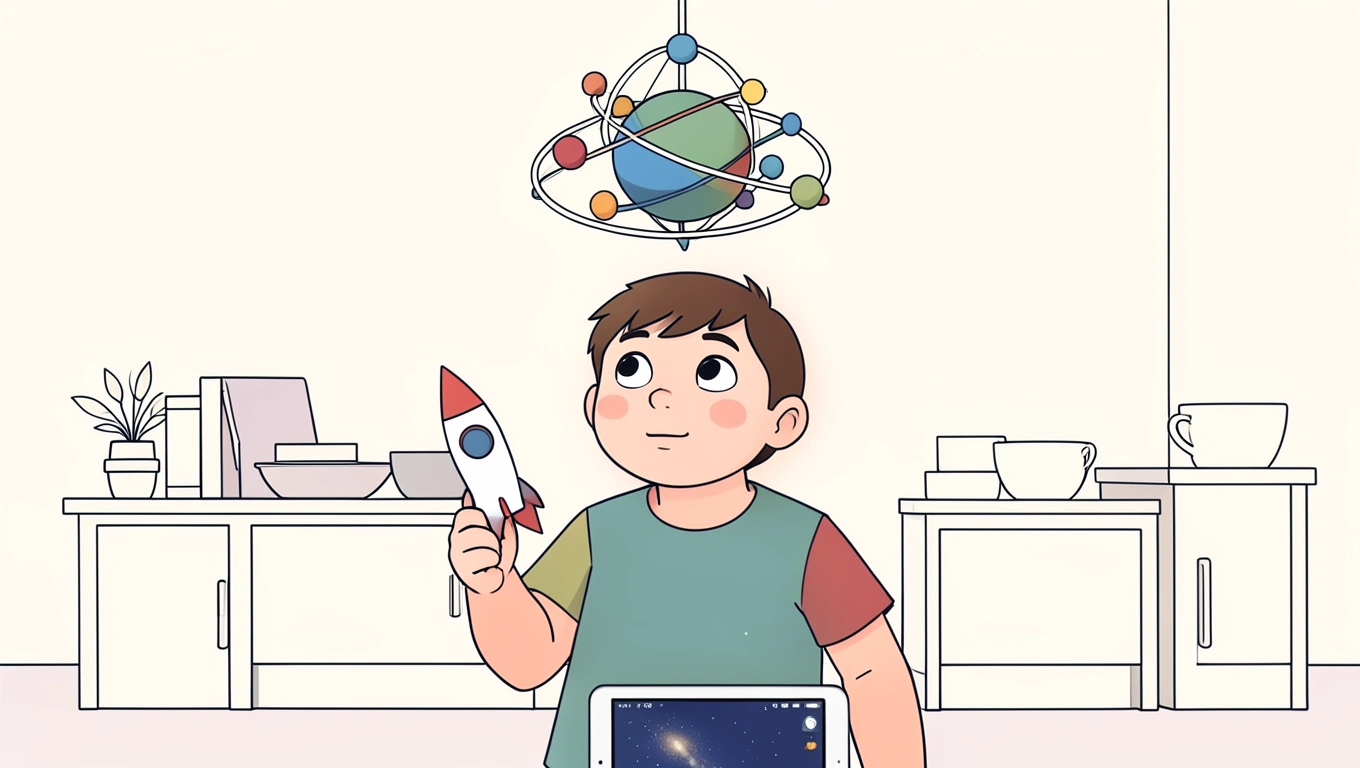
Getting kids excited about space doesn't require a telescope or a trip to NASA. Some of the best cosmic adventures happen right in your living room, backyard, or local park. When you mix a little creativity with everyday materials, you can turn abstract concepts like gravity, orbits, and planetary motion into hands-on experiences that stick. Whether you're crafting a solar system from kitchen supplies or tracking the International Space Station as it passes overhead, these activities make the universe feel closer and more tangible. Let's look at some genuinely fun, low-stress ways to explore space with the young astronomers in your life.
Build Your Own Solar System at Home
Creating a scale model of the solar system teaches kids about planetary sizes and distances without needing a textbook. You can use foam balls of different sizes, paint them in planet-appropriate colors, and hang them from the ceiling in your child's room. If you want to get more hands-on, coffee filters work surprisingly well. Kids can paint each filter to represent a different planet, then you flatten and display them in order on a wall or bulletin board.
The magic happens when you start asking questions together. Why is Jupiter so much bigger than Mars? How far apart should we space the planets if we want to show real distances? NASA offers a detailed guide on building model solar systems that includes actual scale calculations, helping you turn guesswork into a genuine learning moment. You don't need to be exact, but even rough proportions help kids visualize how enormous our cosmic neighborhood really is.
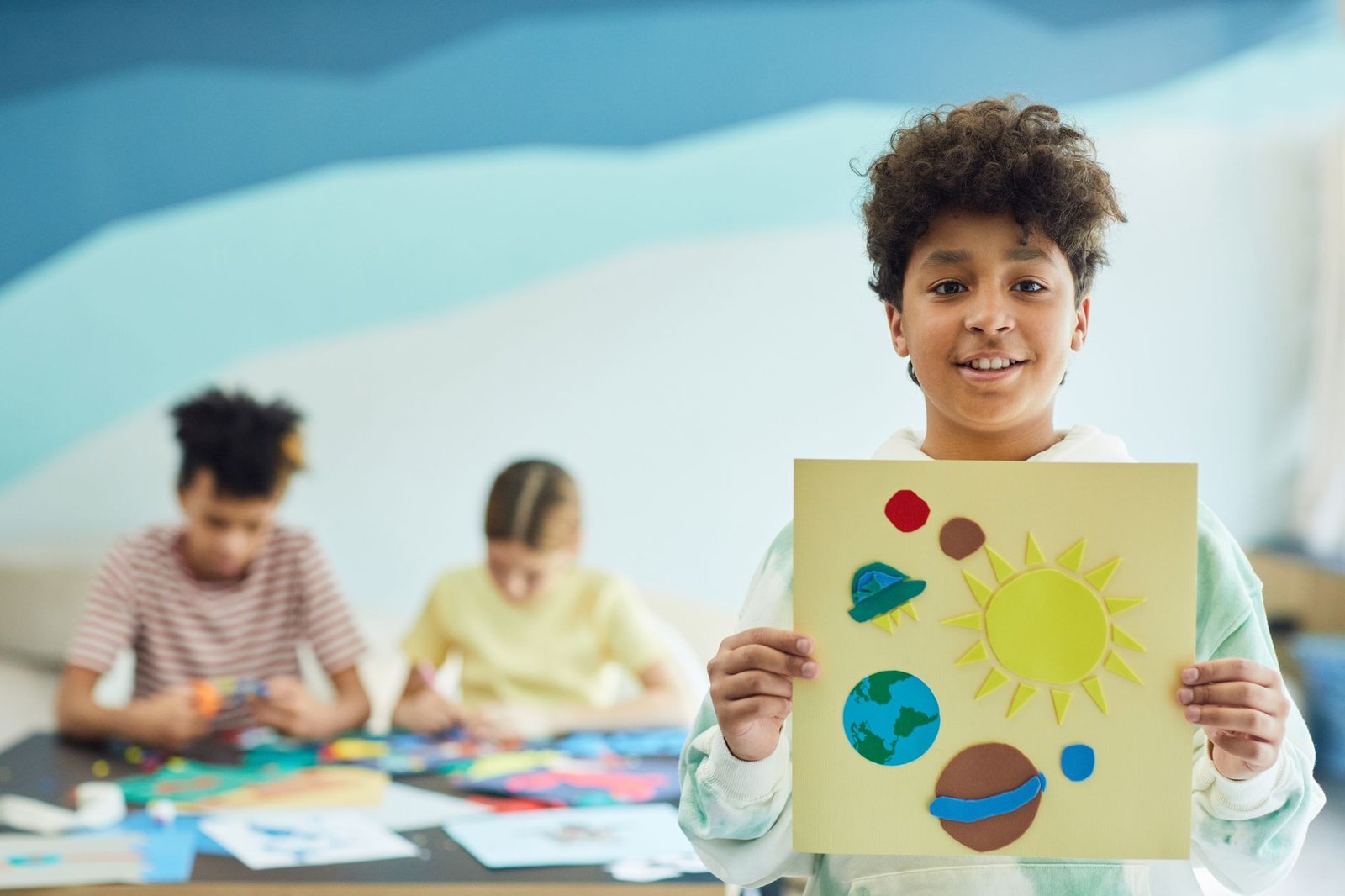
Another approach uses household items you already have. A beach ball can be the Sun, a marble becomes Earth, and a peppercorn works for tiny Mercury. Lay them out in the hallway or driveway, and suddenly the abstract idea of astronomical distances becomes something you can walk through. Kids remember experiences like this far longer than they remember diagrams in a book.
💡 Pro Tip: Label each planet with a fun fact written on an index card. When kids help research and write their own labels, they retain the information better than if you just tell them. Let them pick which fact matters most to them, whether it's how many moons a planet has or how long its year lasts.
Launch Simple Rockets and Explore Motion
Building and launching rockets might sound complicated, but you can start with materials as simple as a straw and a piece of paper. Straw rockets use a basic triangle of paper taped around a straw. You blow through the straw, and the paper rocket shoots off the end. Kids immediately understand thrust and trajectory because they're controlling it with their own breath. From there, you can experiment with different paper shapes, weights, and launch angles to see what flies farthest.
If you want something with a bit more drama, cardboard box rockets let kids climb inside and pretend they're launching to the Moon. Cut out windows, add foil details, and paint on flames. These don't actually fly, of course, but they turn imaginative play into a launchpad for bigger questions about what real rockets need to escape Earth's gravity. You can talk about fuel, speed, and why astronauts wear spacesuits while your child sits inside their homemade capsule.
For a step up in complexity, balloon rockets stretched along a string demonstrate Newton's third law in action. Thread a string across the room, tape a blown-up balloon to a straw on the string, then release the balloon and watch it zip across. The visual is instant, the concept clicks, and you can race multiple balloons to see which design works best. Hands-on space activities like these turn abstract physics into something kids can test and tweak themselves.
💡 Pro Tip: Before launching any rocket, ask your child to predict how far it will go, then measure the actual distance. Comparing prediction to reality sharpens their observation skills and makes the next launch feel like a real experiment, not just playtime.
Use Apps to Identify Real Stars and Planets
Stargazing apps turn your smartphone into a portable planetarium. SkyView Free is one of the most popular options because it works day or night, even indoors. Point your device at the sky, and the app overlays the names and positions of stars, planets, satellites, and constellations directly onto your camera view. It uses augmented reality to help you identify what you're looking at in real time, and it's designed for users of all ages. Kids love the instant feedback, and parents appreciate not needing to memorize constellation maps.
You can use these apps during the day to locate where planets will appear at night, then go outside after dark to find them for real. Spotting Venus or Jupiter with the naked eye feels like a small victory, especially when your child realizes that bright dot isn't a star at all. Star Atlas takes a slightly different approach by offering detailed descriptions and an interactive quiz to test knowledge. It includes a star library and progress tracking, making it useful for kids who want to go deeper than just pointing and identifying.
The real magic happens when you combine the app with outdoor observation. Bring a blanket, some snacks, and your phone, then spend 20 minutes lying on the grass watching for satellites. The International Space Station is visible to the naked eye when it passes overhead, and tracking its path with an app turns a random moving light into a tangible connection to human space exploration. Suddenly, space isn't just something in books. It's something happening right above your head.
Conduct Space-Themed Science Experiments
Science experiments bring space concepts into the kitchen or backyard, and most require ingredients you already have. Making moon craters is one of the simplest and most satisfying. Fill a baking pan with flour or cornstarch, then drop rocks or marbles from different heights to simulate asteroid impacts. Kids see how crater size changes with object size and speed, and they can measure and compare results. It's messy, tactile, and teaches the basics of impact physics without a single equation.
Fizzing planets combine art and chemistry. Roll playdough or modeling clay into planet-shaped balls, hollow out a small cavity in the center, and fill it with baking soda. When kids pour vinegar over their planets, the reaction bubbles and fizzes, mimicking volcanic activity. You can talk about Venus's volcanic surface or Jupiter's Great Red Storm while the fizzing happens, connecting the sensory experience to real planetary science.
Another experiment uses a marble and a stretched sheet to demonstrate how gravity warps spacetime. Place a heavy ball in the center of the sheet to create a dip, then roll a marble around the edge. The marble spirals inward, just like objects orbit around massive stars or planets. PBS offers a collection of space activities designed for home exploration, many of which require only common household items and five minutes of setup time.
Explore Virtual Space Exhibits and Tours
You don't need to visit a museum to see spacecraft up close. Google Arts & Culture provides virtual expeditions and interactive experiences from science museums and space institutions worldwide. Kids can explore 3D models of space shuttles, learn about specific astronaut missions, and view images captured by the Hubble telescope. Google has also used machine learning to analyze NASA's archive of over 127,000 historic images, making decades of space exploration accessible from your couch.
These virtual tours work especially well on rainy days or when you need a quiet activity. You can pause, zoom in, and discuss details at your own pace. Some exhibits let you rotate spacecraft models to see every angle, while others include audio narration from scientists and astronauts. The interactive elements keep kids engaged longer than static photos, and you can revisit favorite exhibits as many times as you want without waiting in line or paying admission.
Pair these virtual tours with related hands-on activities for a fuller experience. After exploring a virtual shuttle, try building a cardboard version together. After viewing Hubble images, print a few favorites and create a space-themed collage. The combination of digital exploration and physical creation helps reinforce what kids are learning and gives them a sense of ownership over the material.
Conclusion
Space exploration with young kids doesn't require expensive equipment or advanced knowledge. It just takes a willingness to experiment, ask questions, and let curiosity lead the way. Whether you're building a solar system from coffee filters, launching straw rockets across the living room, or using an app to find Saturn in the night sky, each activity opens a door to bigger conversations about the universe. The goal isn't to memorize facts. It's to spark that initial sense of wonder that keeps kids asking "why" and "what if" long after the activity ends. Start with one idea that feels easy and fun, then let your child's interests guide where you go next. The best space adventures are the ones you discover together.
FAQs
What age is best to start teaching kids about space?
You can introduce basic space concepts as early as age three or four through picture books and simple stargazing. By age five or six, most kids can handle hands-on projects like building models or conducting simple experiments. Adjust the complexity to match their attention span and motor skills, not a rigid age guideline.
Do I need a telescope to explore space with young kids?
No, a telescope isn't necessary for most beginner activities. Many planets and satellites are visible to the naked eye, especially with the help of a stargazing app. If you do decide to buy a telescope later, start with a simple, kid-friendly model rather than an expensive professional setup.
How do I keep space activities educational without feeling like school?
Focus on play and exploration first, then layer in questions and observations naturally. Let kids lead the activity and choose what interests them most. When learning feels like discovery rather than instruction, kids absorb information without realizing they're being taught.
Can I do space activities indoors during bad weather?
Absolutely. Many of the best space activities work perfectly indoors, including building solar system models, launching balloon or straw rockets across the hallway, conducting crater experiments in a baking pan, or exploring virtual space exhibits on a tablet or computer.
Where can I find free space resources for kids?
NASA's website offers free coloring pages, games, craft ideas, and educational videos designed specifically for children. PBS Kids also provides free space-themed activities and shows. Many science museums offer free virtual tours and downloadable activity sheets on their websites.