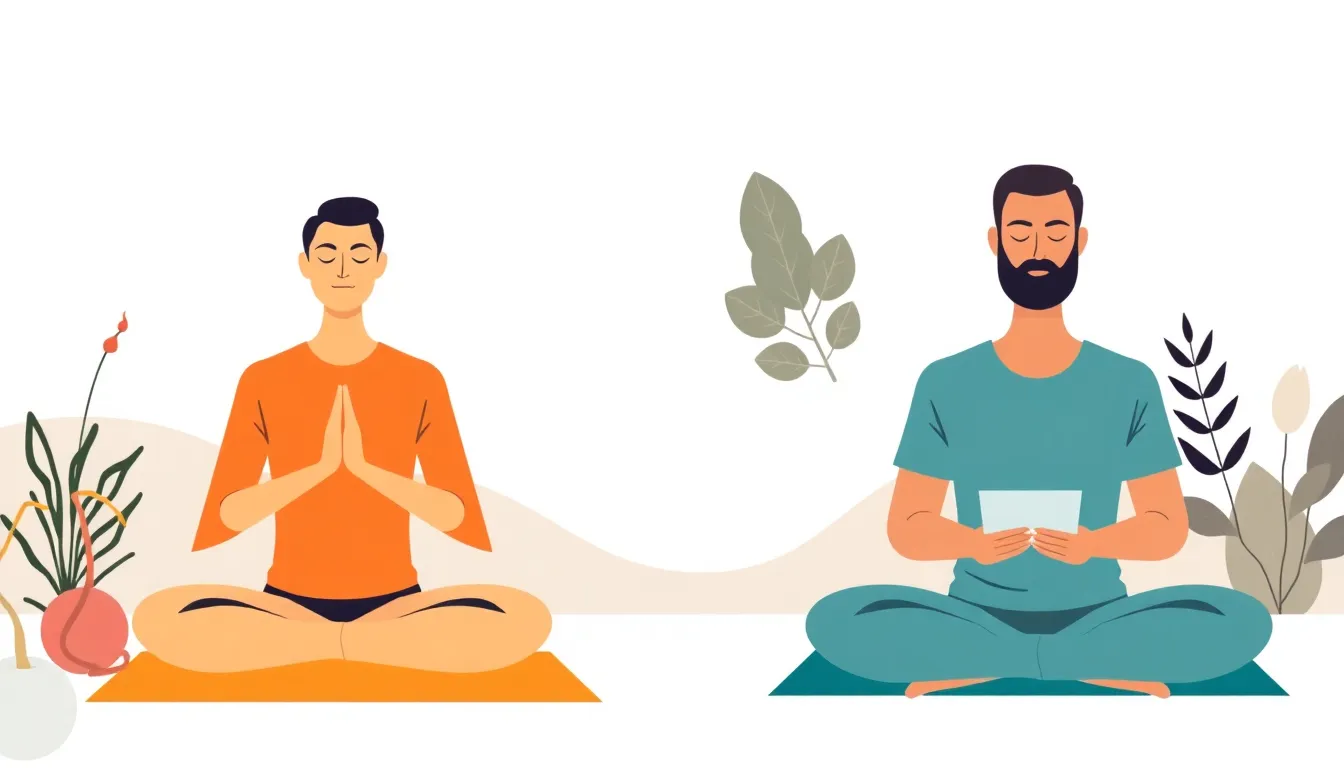
Mindfulness vs. Meditation: What Is the Difference?
When people talk about mindfulness and meditation, they often use these terms interchangeably. It's like referring to all facial tissues as "Kleenex" - we generally know what someone means, but there's actually a meaningful distinction. Understanding the difference between mindfulness and meditation isn't just semantic nitpicking; it can actually transform how you approach mental wellness and personal growth.
The confusion makes sense. Both practices involve mental focus, both have roots in ancient traditions, and both have been scientifically validated for their benefits. But viewing them as identical is a bit like saying running and exercise are the same thing. One is actually a specific type of the other.
Let's clear up this confusion once and for all, looking at what makes each practice unique, how they complement each other, and how understanding their relationship can help you build a more effective mindfulness practice.
What Is Meditation?
Meditation is the broader category - it's the umbrella term for a variety of mental exercises designed to train attention and awareness. Think of meditation as a formal practice, usually (but not always) done in a specific posture, for a designated period of time. It's like setting aside time for a mental workout.
There are dozens of meditation styles from various traditions around the world. Some common types include:
- Concentration meditation (focusing on a single point like the breath)
- Loving-kindness meditation (cultivating feelings of compassion)
- Transcendental meditation (using mantras to transcend ordinary thinking)
- Body scan meditation (systematically attending to different parts of the body)
- Visualization meditation (imagining peaceful scenes or outcomes)
Meditation typically involves intentionally setting aside time to sit (or sometimes walk, lie down, or stand) and engage in the specific practice. It's a dedicated activity with a beginning and an end, like a workout session for your mind. The goal varies depending on the tradition, but often includes reducing stress, increasing self-awareness, and cultivating specific mental states.
💡
Pro-Tip: If you're new to meditation, don't judge your progress by how "blank" you can make your mind. That's a common misconception. Even experienced meditators have thoughts during meditation. Success is noticing when your mind wanders and gently bringing your attention back to your focus point, without self-criticism.
What Is Mindfulness?
Mindfulness is both simpler and more complex than meditation. At its core, mindfulness is a quality of attention - a way of relating to your experience. Jon Kabat-Zinn, who pioneered mindfulness-based stress reduction, defines it as "paying attention in a particular way: on purpose, in the present moment, and non-judgmentally."
Unlike meditation, which is a formal practice you engage in for a specific time, mindfulness can be practiced anywhere, anytime. It's about bringing a certain quality of attention to whatever you're doing:
- Eating mindfully means really tasting your food, noticing textures and flavors
- Walking mindfully means feeling each step, noticing the sensations in your feet
- Listening mindfully means giving someone your full attention without planning your response
Mindfulness doesn't require you to stop what you're doing for a formal practice (though it can include that). Instead, it's about how you engage with whatever you're already doing. It's about being fully present rather than on autopilot, ruminating about the past, or worrying about the future.
When you're mindful, you observe your thoughts and feelings without getting caught up in them. You notice physical sensations without immediately reacting to them. You become aware of your surroundings without getting lost in judgment or storytelling about them.
💡
Pro-Tip: To practice mindfulness during everyday activities, try the "STOP" technique. Stop what you're doing, Take a breath, Observe what's happening in your body/mind/environment, then Proceed. This quick reset can bring you back to the present moment when you notice you've been operating on autopilot.
The Relationship Between Mindfulness and Meditation
So what's the actual relationship between these two practices? Here's the key point: mindfulness is a quality of attention that can be cultivated through various means, and meditation is one of the most effective ways to develop it.
Think of it this way: if mindfulness is a skill (like strength), then meditation is an exercise (like weight lifting) designed to build that skill. You can develop strength through various means, but dedicated strength training is particularly effective. Similarly, while mindfulness can be practiced throughout daily activities, formal meditation is a particularly powerful way to develop mindfulness skills.
There's even a specific type of meditation called mindfulness meditation, which specifically trains the quality of non-judgmental present-moment awareness. In this practice, you typically focus on your breath or bodily sensations while observing thoughts and feelings as they arise without getting caught up in them.
But not all meditation is mindfulness meditation. Some forms of meditation involve concentration to the exclusion of other stimuli, or deliberate visualization, or repetition of mantras - techniques that differ from the open, non-judgmental awareness that characterizes mindfulness.
The Benefits: Different Yet Complementary
Both practices offer significant benefits, with considerable overlap but some distinctions worth noting.
Meditation benefits often include:
- Reduced stress and anxiety
- Improved focus and concentration
- Better emotional regulation
- Enhanced self-awareness
- Potential physical benefits like lower blood pressure
Mindfulness benefits typically include:
- Greater present-moment awareness
- Reduced rumination
- Improved relationship satisfaction
- Greater enjoyment of daily activities
- Decreased reactivity to stressors
The practices work best in tandem - formal meditation sessions help build the "mindfulness muscle" that you can then apply throughout your day in informal practice. The formal practice gives you the skills, while the informal practice integrates those skills into your life.
How to Choose the Right Practice for You
If you're new to both practices, here are some considerations for deciding where to start:
Consider meditation if:
- You benefit from structure and dedicated practice time
- You want to explore various mental training techniques
- You're interested in the deeper aspects of awareness and consciousness
- You have specific goals like stress reduction or improved focus
Focus on mindfulness if:
- You struggle to find time for formal practice
- You want to be more present throughout your daily activities
- You find yourself frequently operating on "autopilot"
- You want to enhance your enjoyment of ordinary experiences
Ideally, though, you wouldn't choose between them. The most powerful approach combines formal meditation with informal mindfulness practice throughout your day. This combination helps you develop the skills in a dedicated setting and then apply them in real-life situations.
Conclusion
The distinction between mindfulness and meditation isn't just academic - it has practical implications for how you approach mental well-being. Understanding that meditation is a formal practice while mindfulness is a quality of attention you can bring to any moment helps clarify how these practices complement each other.
Both have tremendous value, and they work best together. Meditation provides the training ground to develop mindfulness skills, while mindfulness practice helps integrate those skills into your everyday life. It's a bit like learning to play piano - you need both the structured practice sessions AND opportunities to actually play music in real settings.
Whether you're drawn to the structure of meditation or the flexibility of mindfulness practice, the important thing is to begin somewhere. Start with what appeals to you, stay consistent with your practice, and remember that both paths lead to greater awareness, reduced stress, and a richer experience of life.
And honestly? The labels matter less than the practice itself. Whether you call it mindfulness, meditation, or something else entirely, the real value comes from regularly showing up and training your attention in a way that works for you.
Frequently Asked Questions
Can you practice mindfulness without meditation?
Yes, absolutely. While meditation is an excellent way to develop mindfulness skills, you can practice mindfulness in any moment without formal meditation. Simply bringing your full attention to whatever you're doing - whether washing dishes, talking with a friend, or walking in nature - is practicing mindfulness. The key is paying attention to your present experience with openness and without judgment.
How long should I meditate to see benefits?
Research suggests that consistent practice is more important than duration. Even 5-10 minutes daily can produce noticeable benefits over time. Most studies showing significant benefits used protocols of 10-45 minutes per day. If you're just starting, begin with 5 minutes and gradually increase as you become more comfortable with the practice. Consistency matters more than length.
Is mindfulness religious or spiritual?
While mindfulness has roots in Buddhist traditions, contemporary mindfulness practice has been secularized and is now widely taught in non-religious contexts like healthcare, education, and business. You can practice mindfulness as a purely secular attention-training technique or incorporate it into your existing spiritual or religious framework. The core practice of present-moment, non-judgmental awareness is compatible with virtually any belief system or none at all.